Creating a Peaceful Home for Relaxation and Rest
Home should feel like the place where your shoulders drop. Yet for many people, it becomes a mix of unfinished chores, background noise, clutter, and everyone else’s needs. A peaceful home does not require a full renovation or a perfect routine. It starts with small choices that tell your mind, “You can rest here.”

Make space for real rest time
Taking time for yourself is not selfish. It is basic care. It gives the mind room to settle and helps the body shift out of constant doing. This could be 10 quiet minutes with coffee, a bath after dinner, stretching before bed, or reading without a phone nearby.
The key is to treat that time as something real, not something squeezed in only after everything else is done. Choose a simple ritual and repeat it often enough that your home begins to support it.
Good relaxation time has a few clear boundaries:
A beginning
Light a candle, make tea, play calming music, or shut a door.
A small limit
Even 15 minutes can work when it is protected.
No multitasking
Rest loses power when it shares space with chores, texts, or scrolling.
Let your home reflect what calms you
A peaceful home should feel personal, not staged. Look around and ask what actually helps you breathe easier. For one person, it may be clean counters and open space. For another, it may be books, plants, art, and layered textures.
Your home can reflect down-time through simple signals. A chair by a window can become a reading spot. A tray with a candle, a journal, and herbal tea can turn a bedroom corner into a nightly reset. A basket for blankets can invite slower evenings.

Reduce visual noise where it matters most
Clutter can quietly keep the brain alert. That does not mean every room needs to be spotless. Focus on the places where you rest most often.
Start with one surface, such as a nightstand, coffee table, or bathroom counter. Keep only what supports calm or daily use. Use baskets, trays, and drawers to give necessary items a home.
Soft lighting also helps. Swap harsh overhead light for lamps, dimmers, or warm bulbs. In the evening, lower the light before bedtime so the house begins to feel slower.
Bring comfort into the senses
Relaxation often begins with the body. Think about touch, sound, scent, and temperature.
Try adding:
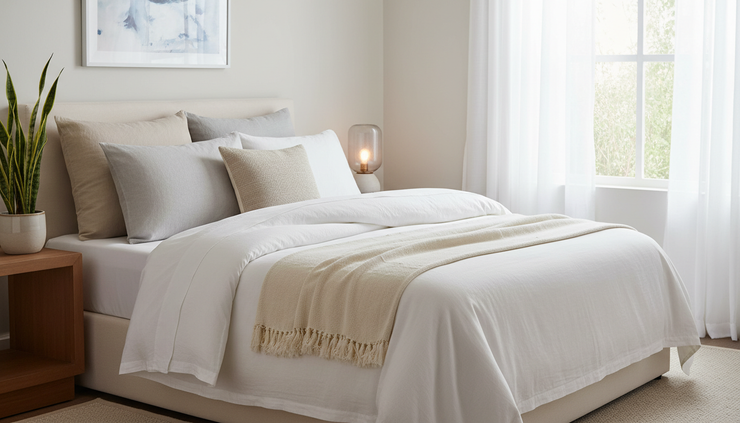
Soft blankets or breathable bedding
A scent you love, such as lavender, cedar, citrus, or vanilla
A calming playlist or quiet room tone
Plants or fresh flowers
A favorite mug, robe, or pillow
These details may seem small, but they create cues. Over time, those cues help the mind connect home with safety, comfort, and rest.
Protect one peaceful corner
If the whole house feels busy, start with one corner. It can be a chair, a bath shelf, a spot on the porch, or even one side of the bed. Keep it clear. Make it inviting. Use it only for things that help you return to yourself.
This corner becomes a promise. Even on full days, there is still a place where peace is allowed.

A peaceful home is built through attention, not perfection. Choose one room, one ritual, or one corner and make it feel like yours. Then return to it often. The more your home reflects your need for rest, the easier it becomes to find relaxation right where you are.
Comments